Arizona Naginata
Kenkyu Kai
Welcome to Our Webpage
Naginata is also Learned by Doing
Not by Reading Webpages …
What is Naginata?
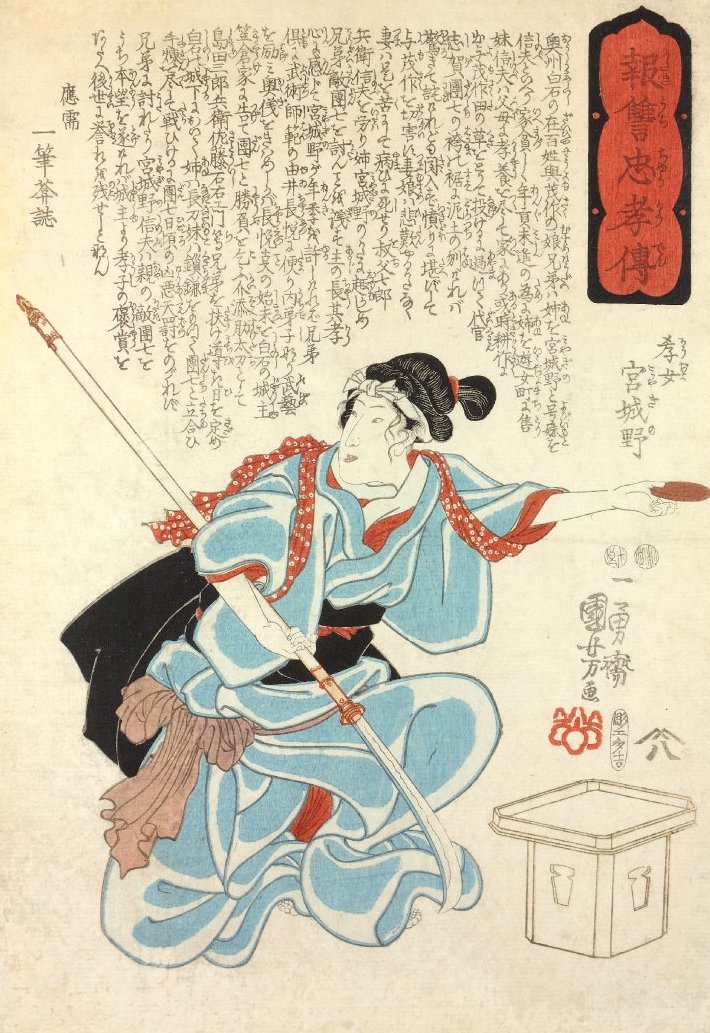
Naginata is Art of the Japanese Reaping Spear
There are 2 common historical polearms from Japan: Yari and Naginata. Confusion
may arise as both are translated as "spears".
The YARI is a sharp, pointed stabbing weapon. The Art of the Japanese Stabbing Spear is Sōjutsu. It is a koryu, or older martial art, meaning teaching is restricted to koryu members. The Kenkyu Kai does NOT teach this art.
The NAGINATA is a sharp, curved bladed weapon, and like other curved blades - sabers or scimitars - it is wielded by sweeping or slashing cuts. Naginata have sharp points, so yes, they can stab; just as Yari - if raked across the opponent - can cut. The technique discriptions used here are for the majority of the drills and waza.
Atarashii - New - Naginata is one of the 9 gen-dai-budo or modern Japanese martial arts; and is part of the Physical Education curriculum in many Japanese High Schools. It uses a light weight practice weapon for training leading to full contact engagements.
Who are We?
The Arizona Naginata Kenkyu Kai
has been practicing atarashii naginata
in the Valley since 1995.
We are a member dojo of the Southern California Naginata Federation,
one of the 7 training regions that make up the United States Naginata Federation.
The United States and 13 other countries/regional federations comprise the
International Naginata Federation, which sets the training curriculum and
testing standards that we follow at the Kenkyu Kai.
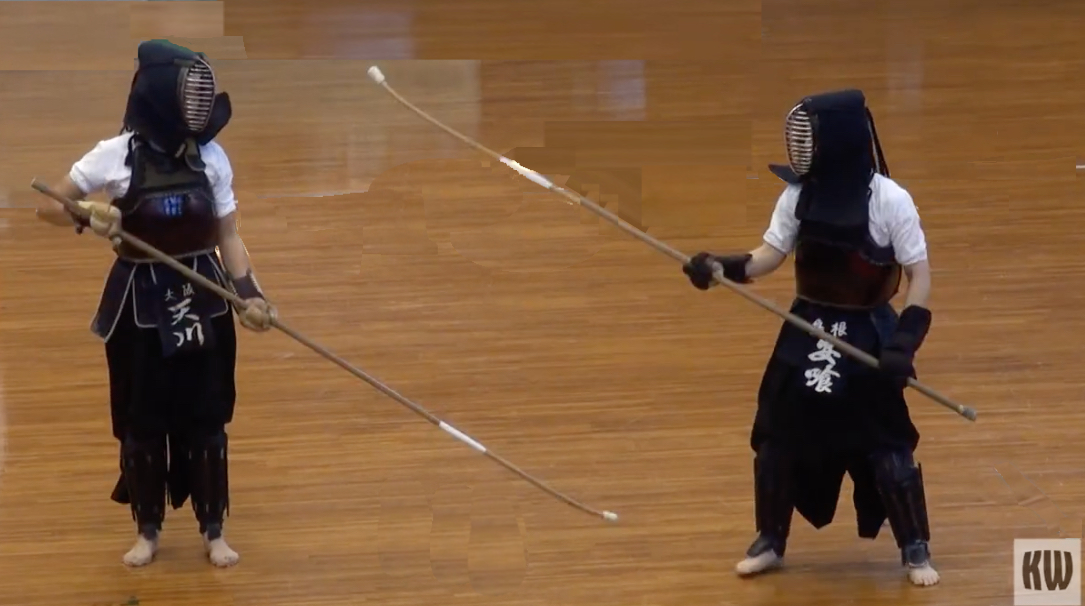
Amagawa v Ajiki, 2014, Kendo World
Practice / Competetion Weapon:
ha - the bamboo "blade"
kissaki - the white leather tip at the blade's end
e - the oak or other hardwood handle
ishizuki - the white leather tip at the handle's end
sen-dan-maki - the white taped joining of blade to handle
Practice / Competetion Uniform:
keiko gi - light weight cotton blouse (kendō keiko gi is a heavier weave)
hakama - pleated pants (kendō hakama design is the same)
Practice / Competetion Armor:
men - the helmet (usually having small shoulder protection than kendō men)
do - chest plate (kendō do design is the same)
tare - the hip and groin protector (kendō tare design is the same)
kote - the gloves (kendō kote are thumb + 4 fingers;
naginata kote are thumb + forefinger + 3 fingers)
sune - shin guards (kendō has no targets below the waist)
Shiai - sparring, requires all of the above.
Watch Team USA Shiai at the 3rd Naginata World Championship (v Belgium)
Engi - forms, requires only a Weapon and Uniform.
Watch Team USA Engi at the 8th Naginata World Championship (v Canada)
How do I start Naginata?
If you are interested in learning naginata,
we offer Open Houses to get you on the mat and moving.
Usually, the 2nd Saturday of the summer months.
To View a Schedule of Open Houses »
Where & When can I Practice?
After you've attended an Open House, you might decide that this budo is for you!
In the West Valley
Tuesday Practice: 5:30 p.m. to 7:00 p.m.
Saturday Practice: 3:00 p.m. to 5:00 p.m.
The Phoenix Society for Historical Swordsmanship
7828 North 19th Avenue, Suite #12, Phoenix, Arizona 85021
How do I get there? »
For General Information regarding Naginata
in the Valley –
questions@phoenixkendo.org